
Mexican filmmaker Guillermo del Toro is one of the most prolific fantasy directors working today and welcomes the audience to an extraordinary and fantastical world in each of his films. He realises these worlds using vivid production design and immerses the viewer with lush cinematography. With meticulous costume and makeup design he is able to bring both beautiful and grotesque creatures to life, many of which have become iconic in fantasy cinema. His mind is full of ambitious and original ideas that result in the imaginative spectacles of del Toro’s filmography. He stores these ideas in his notebooks, within which he elaborately plans all of his potential projects. They include everything from random thoughts to wondrous drawings and are representations of his unique creative process. With all his ideas on paper, however unusual, he begins to craft his stories, through which he demonstrates a remarkable skill: merging genres.
His ability to seamlessly mix seemingly incompatible genres is one of the most impressive aspects of his work. Many of his films feature a combination of genres, often involving fantasy. This can lead to quite strange yet original premises that only Guillermo could have devised. However, this is what defines a Guillermo del Toro film and in an interview with Filmstruck he said:
“The more outlandish or silly the premise, the more attracted I am to trying to make art out of it.”
This makes sense and is clear if you watch one of his films. Let’s take a look at four examples that distinctly reveal del Toro’s proficiency at weaving unique ideas and fusing different genres.
Pan’s Labyrinth
The beginning of Pan’s Labyrinth opens like a fairytale; a narrator describes a tale about a princess who escapes her underground kingdom to see the world above, but the sunlight erases her memory, leaving her father, the King, hoping that she may one day return. In fact, the whole film resembles a fairy tale: it has a young girl as the protagonist, we witness the girl explore a fantasy world as she tries to complete three tasks, and we encounter numerous strange and fantastical creatures, including fairies. However, del Toro subverts the traditional expectations of fairy tales and the fantasy genre by mixing them with the war genre and setting the film a short while after the Spanish Civil War. In doing so, the film becomes a gritty fairy tale.
The story follows this young girl, Ofelia, who goes with her ill, pregnant mother to live with her new stepfather, Captain Vidal. She is a curious and adventurous girl who has an affinity for reading fairy tales and, throughout the film, experiences these fairy tales becoming a reality. Alongside this, we follow Vidal, the captain of a regiment of soldiers who find themselves in a violent struggle against a group of rebels hiding in the mountains, a result of the ruthless civil war in Spain. Early on, we learn about the brutal and tyrannical nature of Vidal through his treatment of two trespassers found in the forest nearby. Throughout the film, the violent actions of Vidal contrast with the innocence of Ofelia and her fairy tales.
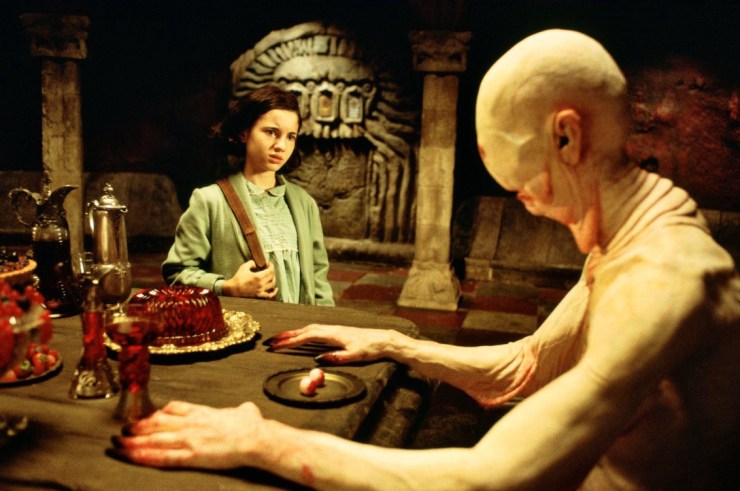
With these two parallel plotlines, del Toro divides the film into two worlds: reality and fantasy. This is how he is able to create an effective mix of genres as each world essentially fits a different genre. Throughout the film, the fantasy world acts as an escape for Ofelia from the evil that she faces in the real world, much like reading her fairy tales. However, del Toro is able to cleverly link the two worlds with various parallels. As Ofelia’s life in the real world becomes more tumultuous, the fantasy world also becomes more disturbing, demonstrated by the nature of the second and third tasks. The tone of the fantasy world reflects that of reality. There is also a clear parallel between Vidal and the pale man. Del Toro juxtaposes Vidal’s dinner party with the scene in the creature’s lair and even creates almost identical shots of the pale man/Vidal at the head of a banquet table. It is quite an effective way to highlight that Vidal is just as much of a monster as the actual grotesque and terrifying child-eating monster. Lastly, certain objects act as motifs and appear in both storylines, such as a key, a knife/dagger, and a timekeeping device (stopwatch/hourglass). These emphasise the idea that both worlds are very much intertwined. The fantasy world itself can even be interpreted as an allegory for the situation in Spain following the civil war. I think these parallels between the two worlds are the most effective technique for linking the storylines and bringing the two genres together.
The Devil’s Backbone
The Devil’s Backbone has many similarities with Pan’s Labyrinth: it takes place during the Spanish Civil War, it has a child as the protagonist, and it too demonstrates Guillermo del Toro’s exceptional skill at blending genres. Here, however, del Toro uses horror instead of fantasy to explore the anguish of the civil war. The film centres around a young boy called Carlos who is sent to an orphanage after his father dies in the war. This orphanage, with its troubled past and mysterious goings-on, provides the claustrophobic setting of the film. It has a secret involving a ghost and the tragic death of one of its orphans. This is the film’s primary source of horror, however, much like Pan’s Labyrinth, the underlying focus of the film seems to be on the civil war. Del Toro contrasts the threat of the supernatural with various other threats that symbolise different aspects of the war itself. We are reminded that the war is ongoing yet absent due to the lingering threat of an unexploded bomb in the center of the courtyard in the orphanage. Jacinto, one of the workers at the orphanage, becomes the deranged villain of the film as a result of the psychological corruption of war. There is also the threat of time as the nationalists are on the brink of winning the war and will soon reach the republican orphanage. These all become greater perils than that of the ghost that haunts the orphanage, highlighting the damage and pain that the war inflicted on Spain.
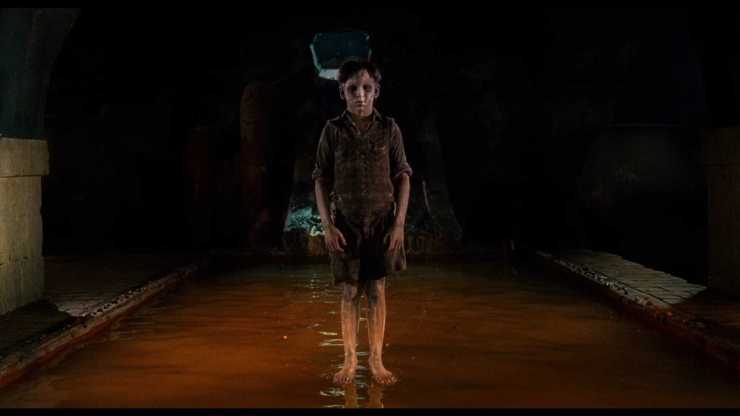
I find The Devil’s Backbone to be possibly Guillermo’s most underrated work because the exploration of the civil war as a ghost story is very effective. Del Toro said himself that “the civil war, which has never completely healed in Spain, is a ghost.” It is a unique way to approach the subject and allowed him to masterfully craft this compelling film.
The Shape of Water
Possibly the most unusual genre-mix out of del Toro’s films is The Shape of Water, the 2018 Best Picture winner about a mute woman falling in love with a fish-man. It is certainly an outlandish premise, but he is able to craft a surprisingly beautiful and sensitive story. The focus of the film is the romance and it is mixed with del Toro’s usual fantasy elements as well as a cold war thriller subplot to spice it up (as if it isn’t already spicy enough). I find this to be one of the most impressive aspects of the film – the fact that del Toro is able to make this strange fusion of tones work.
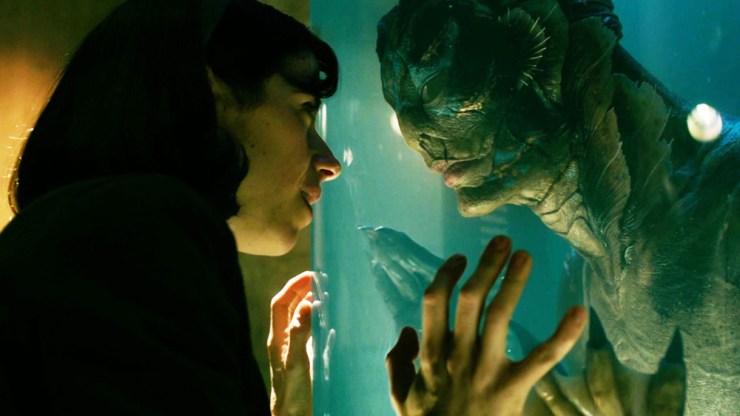
Each genre that can be seen in the film provides distinct emotions that are significant for the story. The heart of the film lies in the romance between the protagonist, Elisa, and the amphibian man, which will never not be strange, but del Toro manages to make it relatable and quite emotional. The fantasy element of the film is represented by the amphibian man, whose presence provides the mystery and wonder of the film. Del Toro ensures to build up to the reveal of the creature and employs exceptional costume and makeup design to elicit a sense of awe from the audience. The amphibian man’s existence motivates each character in a different way, with characters trying to protect him or exploit him. The plot then plays like a thriller set against the backdrop of the cold war, which adds an extra layer of tension. The film, much like Pan’s Labyrinth, could also be described as a gritty fairy tale as it opens with the narration of a story and throughout does not shy away from showing gore. Due to the mixture of genres, del Toro is able to pack in a variety of emotions resulting in an exhilarating ride. It is a unique experience that displays Guillermo’s ambitious filmmaking and is deserving of all the award recognition it received.
Pacific Rim
The final del Toro film that I would like to mention is Pacific Rim, which is definitely his biggest movie – big robots battling big monsters on a big budget. However, I think the influences of the film and the unusual blend of genres make it more than your average summer blockbuster. On his film, Guillermo said:
“I’m not reflecting on any other summer movie so much as I am honoring two things that are crucial: the kaiju and the mecha.”
You may recognise the term “kaiju” as it is the name of the giant monsters in Pacific Rim, but it is also an entire Japanese film genre. It means “strange” or “giant creature” and the genre began with Godzilla in 1954. Epitomised by a man in a suit destroying a miniature city, it has spawned countless franchises both Japanese and American and introduced an array of iconic monsters including Rodan, Mothra and King Kong. Guillermo has emphasised the focus on the design of the kaiju creatures in his film because he wanted to create new, exciting monsters that still felt reminiscent of those that have populated the genre. In Pacific Rim, we see these kaiju face off against enormous robots called Jaegers, constructed and piloted by humans. The influence for these comes from the mecha genre of anime and manga (Japanese animation and comics), which features robots in combat and includes both “super robots” – massive and implausible robots – and “real robots”, which are controlled by realistic technological limitations. This film certainly fits the former category and examples of its influences are Patlabor, Tetsujin-28 and Mobile Suit Gundam. The anime influence is clear when watching Pacific Rim and with his outstanding production design Guillermo is able to translate the recognisable styles of those animations into live-action.
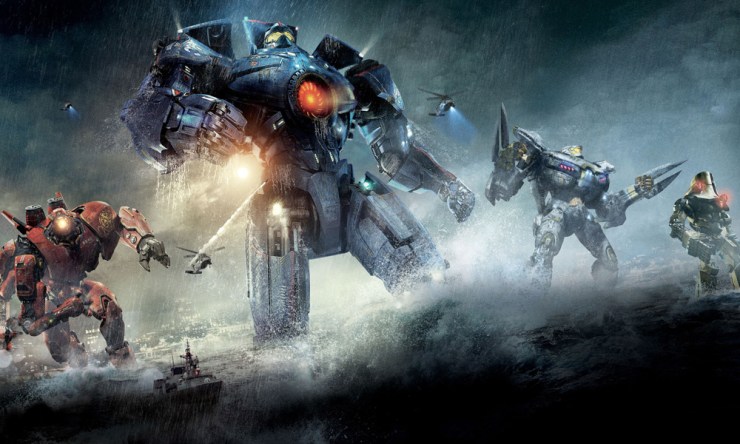
While Pacific Rim could be seen as a typical blockbuster boasting giant robots fighting giant monsters, I think it has much more meaning. Guillermo has combined two popular Japanese genres that he highly respects and loves. He described his film as a “loving poem” to the kaiju and mecha genres, which comes across through the attention to detail and intricate robot and monster designs seen in the movie. There’s no doubt it’s a ridiculous premise, but it’s built around one man’s love of both appreciating and creating art.
Guillermo del Toro is certainly not the only director to frequently mix genres, but I think he is one of the best based on the examples I have discussed. He is a man of many weird and wonderful ideas that he channels into each of his stories, allowing him to present bizarre and original premises. Despite this, he manages to keep his films relatable, demonstrating that he is a storyteller who has mastered his craft.
 CineLiterate